ServicesScreen Cleaning & Repair
Window Screen Cleaning & Repair in Sangaree
Dusty, torn or loose screens get sorted in one visit. We pull each one, scrub the mesh and frame, re-spline or rescreen what is damaged, and set it back in its own window. Drop cloths go down first, and every scrap leaves with us.
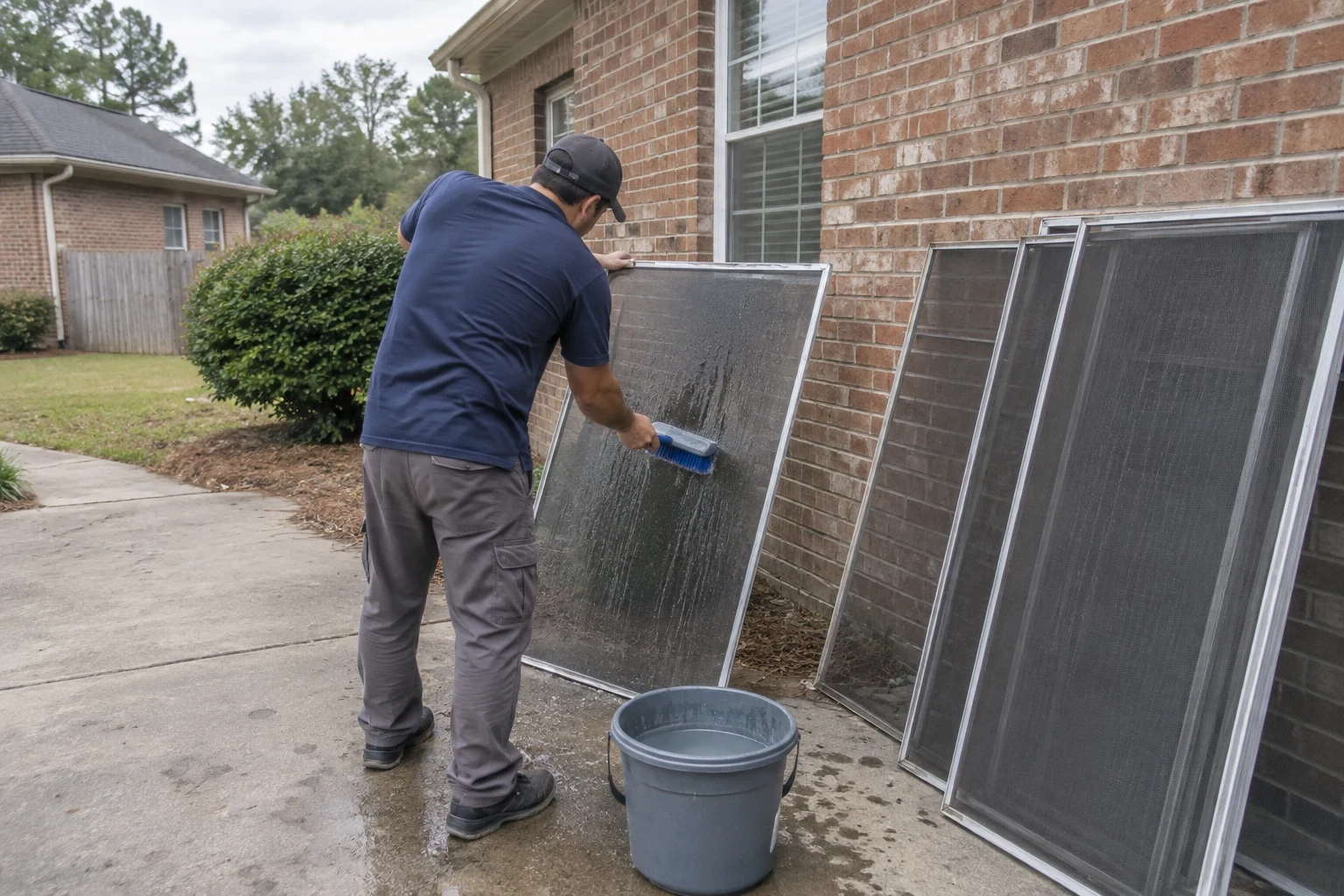
What screen care actually involves
A screen is a few simple parts: a mesh panel, a rubber spline that locks the mesh into a channel, an aluminum frame held square by corner keys, and spring clips or pull tabs that hold it in the window. When one of those parts fails, the whole screen sags, rattles or lets bugs in. When the mesh is dirty, it blocks light and drops grime onto fresh glass every time it rains.
We handle both jobs in one visit. Washing removes pollen, dust and mildew film from the fine weave. Repair means rescreening with new mesh and spline, replacing broken corners or clips, and straightening frames that have bowed. Many customers pair this with residential window cleaning, since clear glass behind a grimy screen still looks hazy from the street.
What we do to each screen
- Labeled removal
- Every screen is tagged to its window before it comes out. That matters because screens that look identical often differ by a quarter inch, and a misplaced one will bind or gap.
- Soft-brush wash and rinse
- We scrub both sides of the mesh with a soft brush and a mild soap solution, then rinse at low pressure. High pressure stretches fiberglass mesh and can pop the spline out of its channel.
- Rescreening torn or sagging mesh
- We pull the old spline, cut out the damaged mesh and roll in new screening with fresh spline at even tension. Old spline gets brittle and shrinks in the sun, which is usually why mesh starts pulling loose at the corners.
- Frame and hardware fixes
- Cracked corner keys, missing tension springs and broken pull tabs are replaced so the screen sits flat and stays put. Bent frames are straightened when the aluminum allows it.
- Mesh options
- Standard fiberglass is the common choice. Aluminum mesh holds its shape longer, and heavier pet-resistant mesh stands up to claws on porch doors and low windows.
Signs your screens need attention
A gray or yellow cast
Screens hold a surprising amount of dust and spring pollen. If the view looks dim behind freshly washed glass, the mesh is the filter catching it.
Mesh pulling from the edge
A gap along the frame means the spline has shrunk or cracked. Small gaps grow, and insects find them quickly.
Dirty streaks on glass after rain
Water running through grimy mesh carries that grime onto the window. Washing the screens keeps the glass clear longer.
Rattling or a loose fit
Missing clips or a racked frame let the screen shift in wind. That rubs paint off the window frame over time.
Tears, holes or bulges
Pets, kids, ladders and storm debris all punch through mesh. Once the weave is broken, it only spreads.
How the visit runs
- 1
Walk-around and count
We go window by window with you or on our own, noting which screens need washing only and which need repair. You hear what we found before we start any repairs.
- 2
Set up a work area
We lay drop cloths on a flat spot in the driveway or yard and set screens on padded supports, never leaning against siding or shrubs. If a second-floor screen has to come out from inside, we use shoe covers and a mat under the window.
- 3
Wash and repair
Screens are washed, rinsed and left to drip dry on the supports. Repairs happen on site with a spline roller and fresh material, so screens rarely leave your property.
- 4
Reinstall and check
Each screen goes back in its labeled window and we check that it seats evenly and the clips engage. A screen that is forced in will bow the frame.
- 5
Haul-off and tidy
Old mesh, spline scraps and cut tags are bagged and hauled off. We rinse any drips off sills and walkways and pick up the drop cloths last.
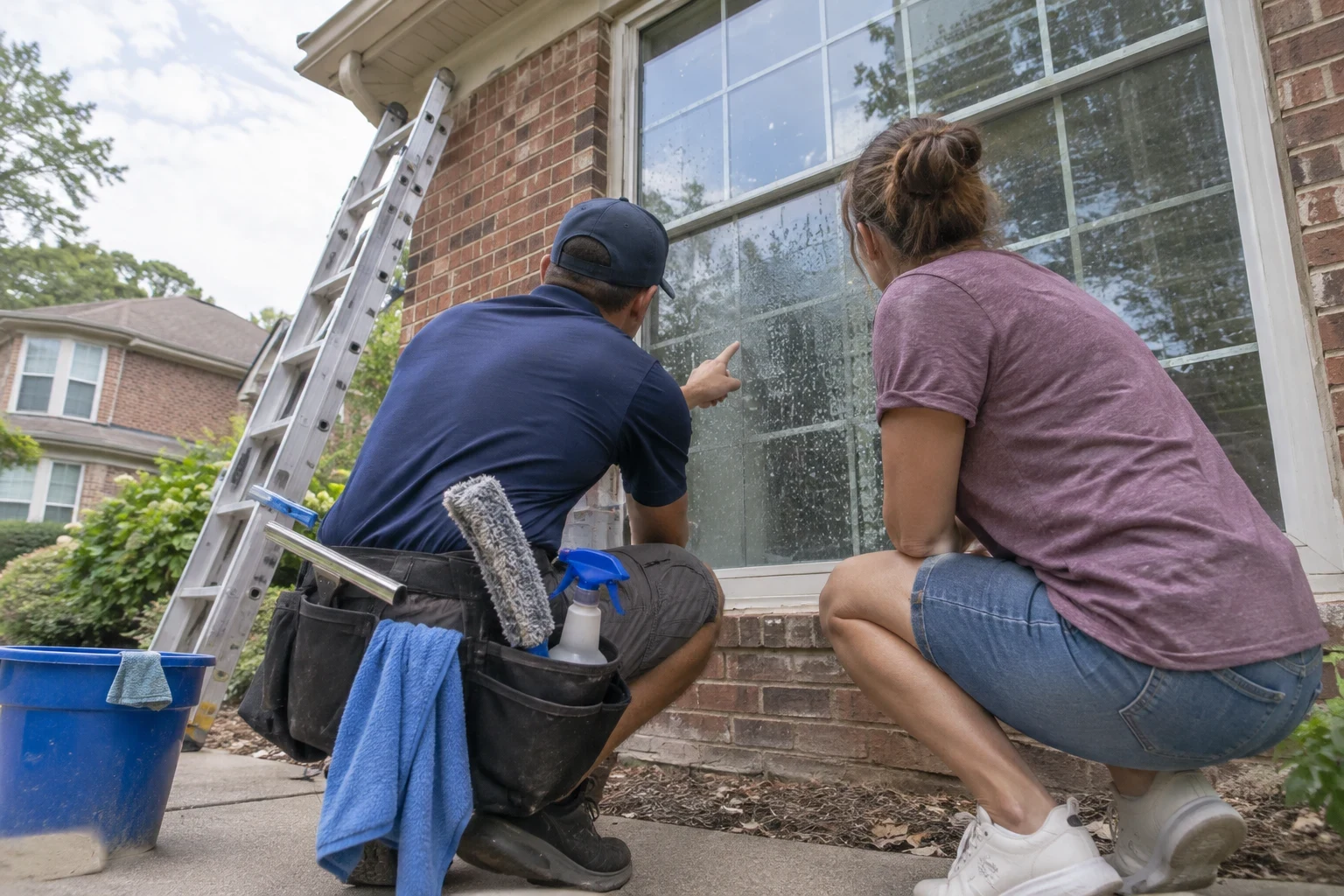
What moves the cost of screen work
Each screen is priced on its own, based on what it needs. A wash runs less per screen than a rescreen, and rebuilding a frame runs higher than either. We go over the numbers by phone and confirm them after the walk-around, before any repair starts.
- Number and size of screens
- Large sliding door screens and oversized picture window screens take more mesh and more time than a standard double-hung screen.
- Wash versus repair
- Washing is quick per screen. Rescreening adds material and labor, and replacing corner keys or springs adds parts.
- Mesh type
- Fiberglass costs the least. Aluminum and pet-resistant mesh cost more and take more care to roll in evenly.
- Access
- Screens that come out from inside, or that sit above a roofline, take longer to remove and reinstall safely.
- Pairing with other work
- Booking screens in the same visit as residential window cleaning or track and sill work means one setup and one breakdown.
Screen questions we hear often
Something not covered here? (843) 487-0767
Can my torn screen be fixed, or does it need a new frame?
Most torn screens only need new mesh and spline; the frame is reusable. A new frame makes sense when the aluminum is kinked, the corners are split or the channel is crushed so spline will not hold. We tell you which it is after looking.
Do you take the screens away to work on them?
Usually not. We wash and rescreen in your driveway or yard on a covered work area. That keeps every screen matched to its window and means you are not without screens for days.
Do I need to be home?
Only if screens have to come out from inside. Exterior-removable screens can be handled while you are out, as long as we have gate access. Tell us by phone which kind you have and we will plan around it.
Can you match my existing mesh color?
Charcoal and gray are the common colors, and we can match them closely. Charcoal tends to be easier to see through, so some customers switch when they rescreen. We can talk through the difference by phone.
Should screens be washed when the windows are?
It works best together. Bright glass behind dusty mesh still looks dull, and the first rain through a grimy screen will spot the glass again. Doing both in one visit also means one setup and one haul-off.
Ready for screens you can see through again
Give us a rough count of your screens and say which ones are torn, loose or just dusty. We will explain what each one needs and what it will cost, and your yard is left as tidy as we found it.